
What is SCIM Provisioning?
SCIM (System for Cross-domain Identity Management) is an open standard (defined in RFC 7643 and RFC 7644) that enables automated user provisioning and deprovisioning between identity providers and applications. Developed primarily to make identity management in cloud applications and services easier, scim builds apon existing schemas and deployments placing specific emphasis on simplicity of development and integration, while applying existing authentication, authorization, and privacy models
In simple terms: SCIM provisioning ensures that user accounts are automatically created, updated, and deleted across systems—without manual intervention.
For example:
- When a user is added in Okta → SCIM creates the user in your app
- When a user’s role changes → SCIM updates permissions
- When a user leaves the company → SCIM deactivates their account
The driving force behind SCIM is over traditional provisioning mechanisms is automation and standardization. Traditional provisioning is a slow, manual and error-prone process. SCIM, on the other hand, provides a standardized protocol for real-time provisioning and de-provisioning, ensuring that when an employee joins, changes roles, or leaves the organization, their access rights are updated consistently across all connected systems. This reduces security risks like orphaned accounts while improving operational efficiency.
Take a large organization with hundreds if not thousands of employees. Manually creating accounts, assigning permissions is fraught with errors and is time-consuming.
SCIM Architecture
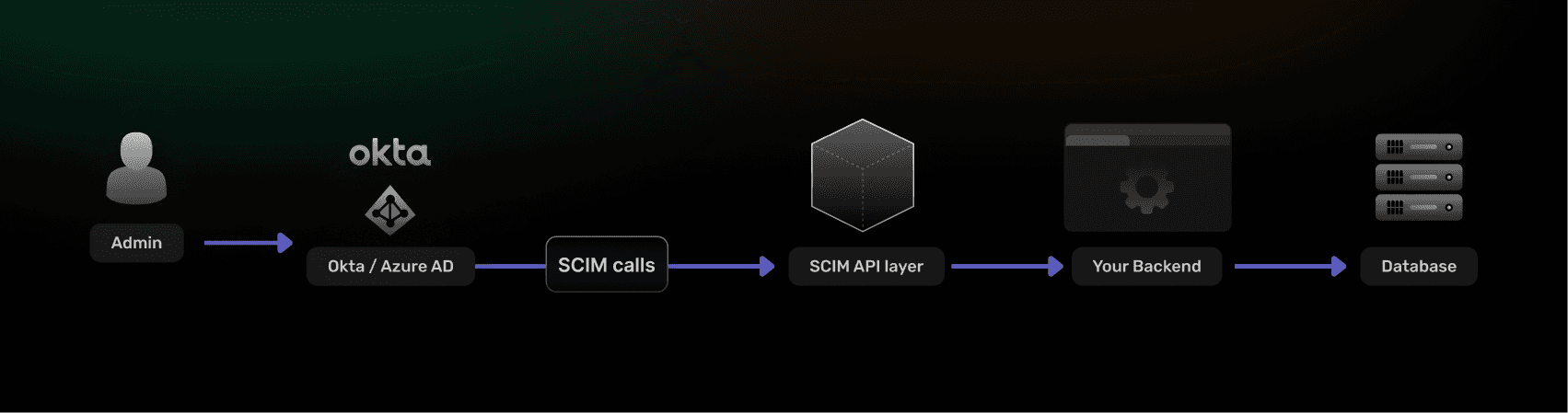
SCIM is an open RESTful specification. This enables it to use common HTTP methods such as POST, GET, PUT, PATCH, and DELETE to perform CRUD operations to provision and synchronize identity resources across multiple independent systems and domains.
SCIM also speicifies an interoperable JSON-based schema that any SCIM-compliant Client (identity providers) and cloud-based Service Provider (SaaS applications) can use to provision and de-provision user/employee accounts and attributes, ensuring identity data remains consistent and up-to-date across both systems.
Why SCIM Provisioning Matters
SCIM solves one of the most painful problems in SaaS: identity lifecycle management at scale.
1. Eliminates Manual User Management
Without SCIM:
- Admins manually create accounts
- Permissions drift over time
- Offboarding is inconsistent
With SCIM:
- Everything is automated and consistent
2. Improves Security (Critical for SaaS)
The biggest benefit is automatic deprovisioning.
Without SCIM:
- Ex-employees may retain access for days or weeks
With SCIM:
- Access is revoked instantly
3. Required for Enterprise Sales
If you’re building a B2B SaaS product:
SCIM provisioning is often a deal-breaker requirement for enterprise customers.
Most companies using:
- Okta
- Azure AD
- Google Workspace
…expect SCIM support out of the box.
How SCIM Provisioning Works
At a high level, SCIM follows a push-based model:
- Identity Provider (IdP) acts as the source of truth
- Your application exposes a SCIM API
- The IdP sends HTTP requests to your SCIM endpoints
Typical Flow
SCIM operates with two main actors:
| Role | Description |
|---|---|
| SCIM Client (IdP) | Source of truth (Okta, Azure AD) |
| SCIM Server (Your App) | Receives and applies identity updates |
The Flow
- Admin creates/updates user in IdP
- IdP sends a SCIM API request
- Your app updates user state
- Changes propagate across all systems
This includes:
POST /Users→ Create userPATCH /Users/{id}→ Update attributesDELETE /Users/{id}→ Deprovision
SCIM uses REST + JSON + standardized schemas to make this interoperable across vendors.
Core SCIM Operations
1. Create User
POST /Users
Payload:
{
  "userName": "[email protected]",
  "name": {
    "givenName": "John",
    "familyName": "Doe"
  },
  "active": true
}
2. Update User
PATCH /Users/{id}
Used for:
- Role updates
- Email changes
- Profile edits
3. Deactivate User
PATCH /Users/{id}
{
  "active": false
}
Important: SCIM typically deactivates, not deletes users.
4. Group Management
POST /Groups
PATCH /Groups/{id}
Used to sync:
- Teams
- Roles
- Permissions
SCIM Schema Overview
SCIM defines a standardized user schema:
{
  "id": "123",
  "userName": "[email protected]",
  "emails": [
    {
      "value": "[email protected]",
      "primary": true
    }
  ],
  "active": true
}
Key fields:
userName→ unique identifieractive→ provisioning stateemails→ contact infogroups→ authorization mapping
SCIM vs SSO: What’s the Difference?
This is one of the most common questions
| Feature | SCIM | SSO |
|---|---|---|
| Purpose | User provisioning | Authentication |
| When used | Before login | During login |
| Handles user lifecycle | ✅ Yes | ❌ No |
| Example | Create user in app | Log user in |
SSO logs users in. SCIM ensures the user exists and is correctly configured.
You almost always need both together for enterprise readiness.
Implementing SCIM Provisioning in Your App
Step 1: Expose SCIM Endpoints
You’ll need to implement:
POST /UsersGET /UsersPATCH /Users/{id}DELETE /Users/{id}(optional)POST /Groups
Step 2: Add Authentication
SCIM APIs are typically secured using:
- Bearer tokens
- OAuth tokens
- API keys
Step 3: Map SCIM → Internal User Model
Example (Node.js + TypeScript):
interface SCIMUser {
  userName: string;
  active: boolean;
  name?: {
    givenName?: string;
    familyName?: string;
  };\
}

function mapToInternalUser(scimUser: SCIMUser) {
  return {
    email: scimUser.userName,
    isActive: scimUser.active,
    firstName: scimUser.name?.givenName,
    lastName: scimUser.name?.familyName,
  };
}
Step 4: Handle Idempotency
SCIM providers may retry requests.
You must:
- Avoid duplicate users
- Handle updates safely
Step 5: Support Filtering
Example:
GET /Users?filter=userName eq ”[email protected]”
This is critical for:
- User lookup
- Sync validation
SCIM Provisioning with SuperTokens
SuperTokens is primarily an authentication solution, but SCIM fits into the broader identity architecture.
Where SuperTokens Fits
SuperTokens handles:
- Authentication (login, sessions)
- User management
- Multi-tenancy
SCIM complements this by:
- Syncing users from external IdPs
- Managing lifecycle events
How You’d Build SCIM on Top of SuperTokens
- Use SuperTokens for:
- Session management
- User storage
- Build a SCIM service layer:
- REST endpoints
- Mapping logic
- Sync SCIM users into SuperTokens:
await createUser({
  email: scimUser.userName,
  password: generateRandomPassword(),
});
Why This Approach Works
- Full control over user data
- No vendor lock-in
- Enterprise-ready architecture
When Should You Add SCIM?
You should implement SCIM if:
- You’re selling to mid-market or enterprise
- Customers ask for Okta/Azure AD integration
- You support multi-tenant organizations
You can delay SCIM if:
- You’re early-stage
- Focused on B2C
Final Thoughts
SCIM provisioning is no longer optional for serious SaaS products.
It transforms identity management from:
- Manual → Automated
- Risky → Secure
- Fragmented → Centralized
If you’re building for enterprise, SCIM + SSO is the baseline---not a differentiator.
FAQ
What is SCIM provisioning?
SCIM provisioning is a standard for automatically creating, updating, and deactivating users across systems using a REST API.
Is SCIM required for SSO?
No, but they are complementary. SSO handles login, while SCIM manages user lifecycle.
Which providers support SCIM?
Common providers include:
- Okta
- Azure AD
- Google Workspace
Does SuperTokens support SCIM?
SuperTokens does not provide SCIM out of the box, but you can implement SCIM endpoints on top of it for full control and flexibility.